


The ladder is missing rungs: Where will your next senior leaders come from?
October 6, 2026
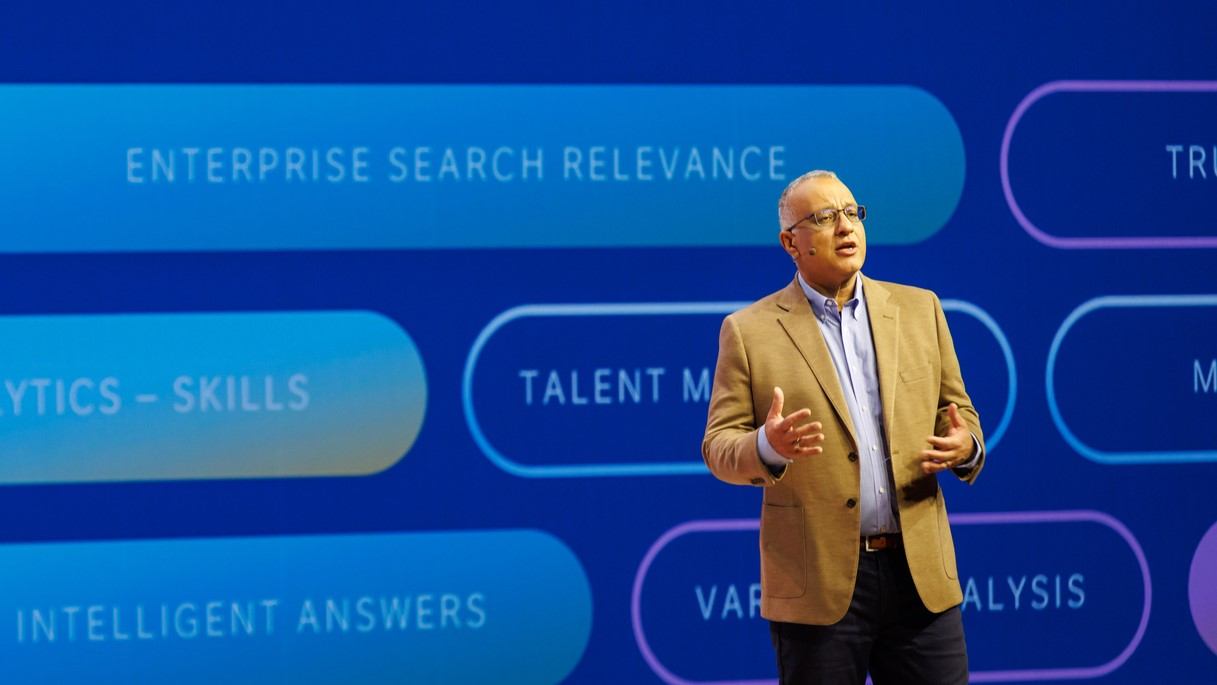
Dr Thomas Chamorro-Premuzic, academic, author and chief innovation officer at Manpower Group, kicked off Workday’s Rising EMEA conference in Barcelona by declaring “humans have a long history, a very clear track record of blaming their own technological inventions for their…demise”.
“It’s very easy to blame AI for our lack of focus, our biases, and our inflated, yet fragile, egos” – but the reality is that AI is resembling humans more and more, and “we don’t like what we see reflected in the mirror”.
But there is an opportunity here for humans to seize the moment, and improve ourselves.
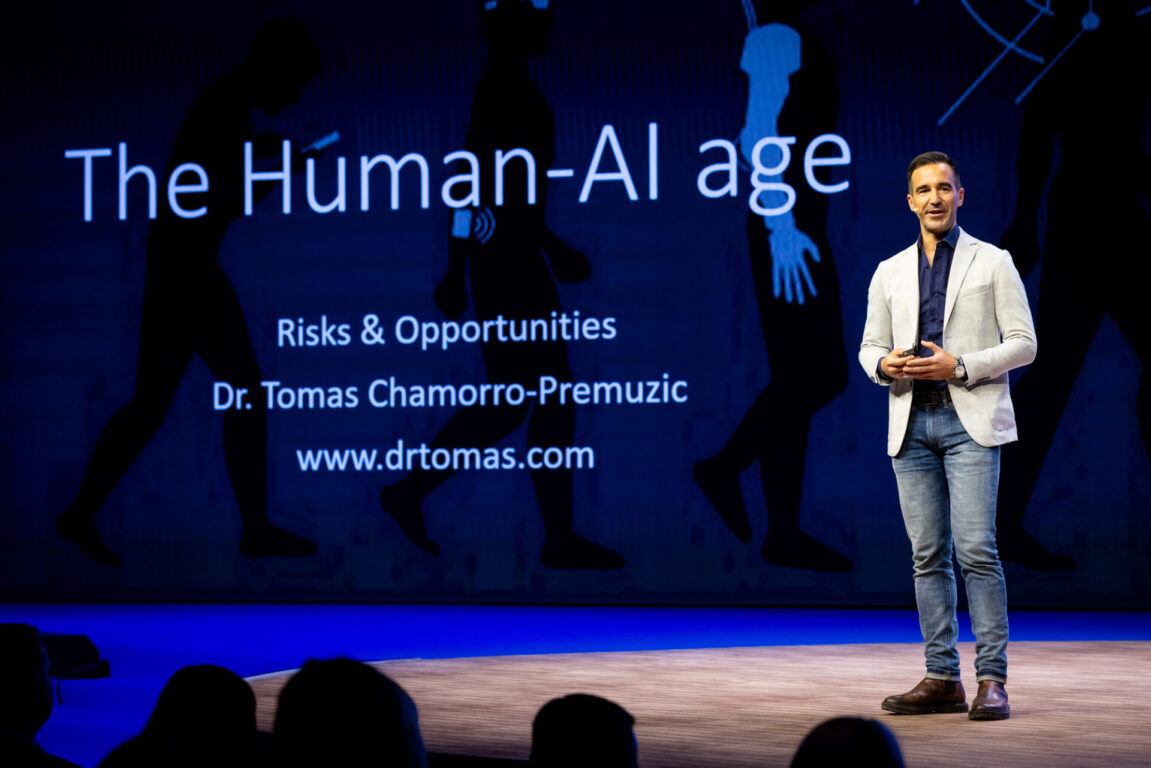
At Workday Rising EMEA, he shares a few recommendations.
Plus, “AI has already changed the meaning of human expertise. It used to be about knowing all the answers, now it is about asking the right questions and knowing when the [AI] insights are wrong”.
AI can churn out a lot of information, but not all of it is “nutritional or good for your hungry mind”.
Analytical skills and critical thinking are still core human skills.
Putting the human front and center in the conversations about AI was not just the theme of Dr Chamorro-Premuzic’s keynote – it was also a priority for Workday as a technology company.
Carl Eschenbach, newly appointed co-CEO of Workday, stated in his Day One keynote: “Here at Workday we talk about a human-centered approach to leveraging AI and technology. We’re trying to figure out how AI actually amplifies the human impact on what we do”.
During his Day Two innovation keynote, Sayan Chakraborty, co-president at Workday, added: “We believe humans should be at the center of this technology – they should be in the driver’s seat.”
Speaking exclusively to UNLEASH, Angelique de Vries, Workday's president of EMEA, echoes Chakraborty.
Workday’s embracing of AI comes with the “conscious mindset to always be human-centric,” she said.
“Humans need to be the decision makers” – technology is just there to make suggestions.
If Workday, and the technology world as a whole, can get AI right, it will “create a step function change in human-productivity”, noted Eschenbach.
Linked with the human-centricity focus on Workday, the tech giant used its Rising EMEA conference to really dive into its responsible AI commitments.
“We’re going to use the word trust a lot this week,” shared Eschenbach. It may be a small word, but it is front and center for Workday, and it has to be earnt (and not just once, continually).
Workday’s commitment to responsible AI is exemplified by its dedicated chief responsible AI officer Kelly Trindel, and her multi-disciplinary team of experts.
Stay tuned to read UNLEASH’s full exclusive interview with Trindel on how Workday is actually putting AI ethics, trust and transparency into practice.
Chakraborty continued: “If we can enable generative AI safely, it’ll open up fantastic new opportunities” – yes, there’s a lot of hype around the technology, but there is lots of incredible value.
During an exclusive press and analysts panel, Chakraborty described large language models as “as close to a generalized problem solver that human brings have invented”.
LLMs can solve problems across a wide range of industries, “there aren’t that many technologies that can be applied so broadly”.
Here at UNLEASH we are focused on the HR use cases of AI. Workday has already implemented 40, the vendor says.
Examples include writing job descriptions, recommending learning courses, and suggesting skills for certain worker profiles and job types.
The good news is that HR leaders, and specifically CHROs, now have a seat at the C-Suite table – this is happening within the AI space, as well as beyond.
Chakraborty declared in the press panel, “every business has become a talent business”.
He shared that this is because of the role that AI can play in solving the skills and talent shortages that are acutely affecting organizations across the world.
Talent and skills shortages are not a short-term trend – making HR and AI’s partnership even more important.
Richard Doherty, senior director, product marketing, EMEA, for Workday, who spends his time listening to the HR market, tells UNLEASH in an exclusive interview at Workday Rising EMEA about the demographic challenges businesses are facing.
“People are living longer, and birth rates are declining in developed nations. There are going to be fewer workers”.
Carolyn Horne, senior vice-president, EMEA strategic customer engagements at Workday, who is also very close to the HR market, agrees.
“People transformation is a hot topic” for not just the CHRO, but also the CEO. It is not about implementing AI for HR, but also “really driving people, culture transformation in your organization”.
Speaking exclusively to UNLEASH, Chakraborty adds that given the demographic issues, “we need the productivity gains” from AI, and he argues there is a need to leverage AI to create a skills-based organizations.
Horne agrees that organizations have no choice but “to become a skill business” – if you don’t, you’ll fall behind the curve.
By focusing on skills, not experience – and using AI to do this at speed and scale – organizations can create not just a more diverse workforce, “but a more socially equitable workforce”.
So that’s Chakraborty’s prediction for 2024 – one where AI empowers more equitable workplaces powered by skills. UNLEASH will be digging into Workday and the future of skills soon - stay tuned!
But what do other Workday executives UNLEASH spoke to at Workday Rising EMEA have to say?
For Trindel, Workday’s chief responsible AI officer, next year people “will have a better understanding and concept of the generative AI space, and how to use it in a that’s thoughtful, responsible and valuable for business processes”.
Currently, there’s a lot of playing and experimentation with ChatGPT, for example in people’s personal lives. But 2024 will be the year of thinking about: “How do we use this technology to actually benefit our business?"
Doherty agrees; “It’s not AI for AI’s sake”– the focus needs to be on business outcomes, and how it can drive huge efficiencies and productivity for employees, organizations and the HR function specifically.
Moving away from technology for a minute, according to Horne, diversity and inclusion will be a hot topic in 2024.
“It is not a question of if – companies have to have this in their DNA; it must be part of who they are.”
Horne says there’s been a real shift in the conversation recently, and that data and technology has a huge role to play in helping organizations have more visibility, and then take action.