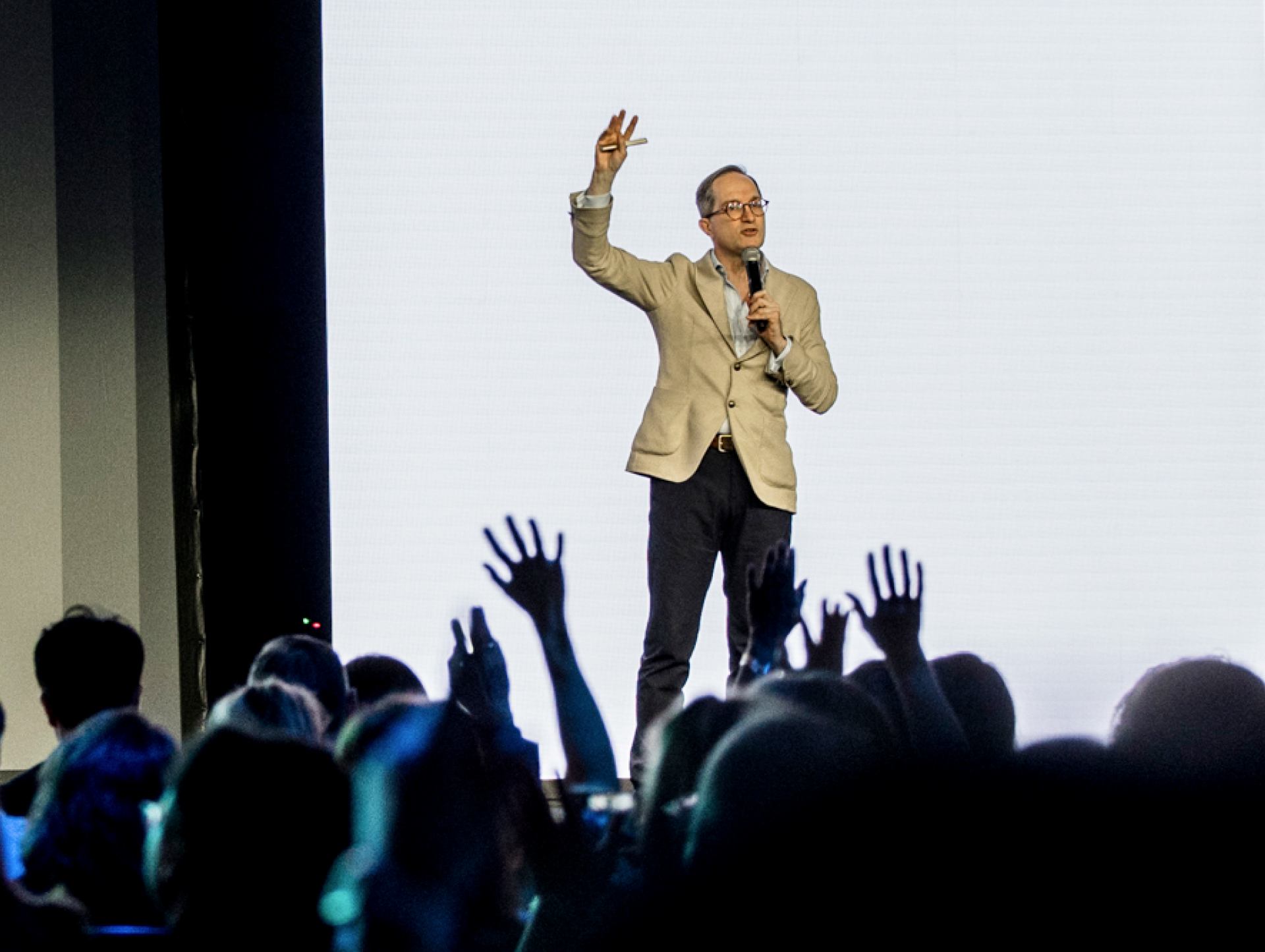



‘One inch ahead’: Howard Yu on why AI success is built daily
October 1, 2026

Is AI creating a divide within the workforce, where some employees are embracing the technology, and others are resisting it?
New data from Culture Amp suggests that 67% of HR professionals that aren’t already using AI are at risk of falling behind, creating a ‘two-tiered workforce’.
The global data – that pooled 237 HR professionals – found that although 79% of HR professionals regularly use Gen AI, 77% admit to being self-taught. This suggests that there is a lack of formal training as to how the tool can be correctly applied within HR.
To understand how this can be corrected, UNLEASH speaks exclusively to Nick Matthews, General Manager, EMEA at Culture Amp.
Although there is a lack of professional AI training for employees, 24% of respondents shared that they believe the responsibility for driving the technology forward sits with IT and engineering departments.
In comparison, 21% felt responsibility lies with executive leadership, 10% with other departments, and 6% with R&D.
What’s more, 35% admitted that no one currently owns the AI strategy at their organization – a high percentage given the growing governance, regulatory, and risk management obligations under the EU AI Act.
The lack of clear ownership makes room for a strategic void, raising questions, such as: Who should be responsible for AI’s integration into the workplace? How should organizations prepare for these digital transformations?
"The implications extend well beyond system implementation to encompass all aspects of organizational design, skills and capability shifts as well as the knock on impacts on learning and development.”
The data also suggests that 91% of HR professionals intend on increasing their use of Gen AI over the next 12 months, with almost half (47%) believing it will increase the perceived value of HR expertise in their organization.
“Forward-thinking HR leaders are uniquely positioned to lead this transformation,” Matthews adds.
“Their deep understanding of their people, combined with their knowledge of how the business works in practice, makes them natural partners for C-suite colleagues navigating AI adoption.
“It is up to HR leaders to develop comprehensive AI strategies that encompass all aspects of the employee lifecycle. This requires moving beyond traditional HR boundaries to become strategic business partners in supporting true organizational transformation.
“The risk of inaction is to be sidelined by other departments who believe that AI should sit with them.”