


What’s happening with pensions? Inside global reforms to retirement plans
August 27, 2025

Employers across the world are grappling with continued economic instability and rising costs – putting pressures on their HR budgets.
According to new research from WTW, rising benefits costs is the top issue facing organizations, but they are also facing significant competition for talent.
This means they cannot roll back their benefit investments if they want to continue to attract and retain the talent they need to be successful.
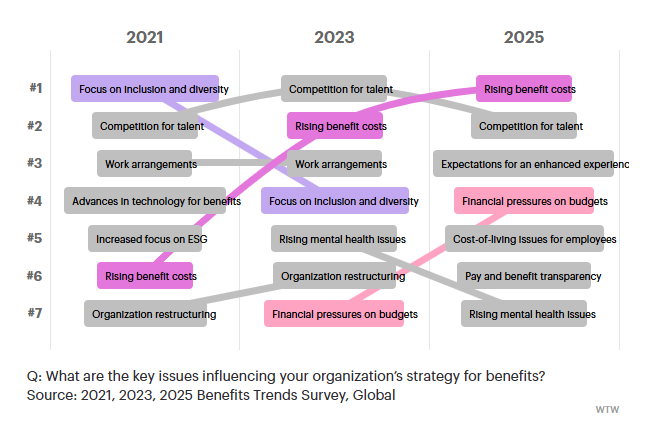
What’s the solution? WTW’s 2025 Benefits Trends Survey, which canvassed more than 5,500 employers worldwide, argues that employers need to be smarter with their limited budgets.
Talking about the results, Jon Gardner, Senior Economist at WTW, tells UNLEASH: “While cost is the top concern, employers aren't backing away from their benefit ambitions.
“Instead, they’re shifting tactics to enable smarter spending, sharper focus and using benefits as a strategic tool to drive engagement, retention and purpose.
The question that remains is how (and where) exactly should employers, and specifically HR teams, shift their efforts and become smarter around benefits?
The WTW study concludes that "it's not about more, it's about better". "The organizations that succeed will be the ones who make every benefit dollar count."
They are reallocating and rebalancing their benefit spend to focus more on what employees need, and the value that each benefit brings to the organization.
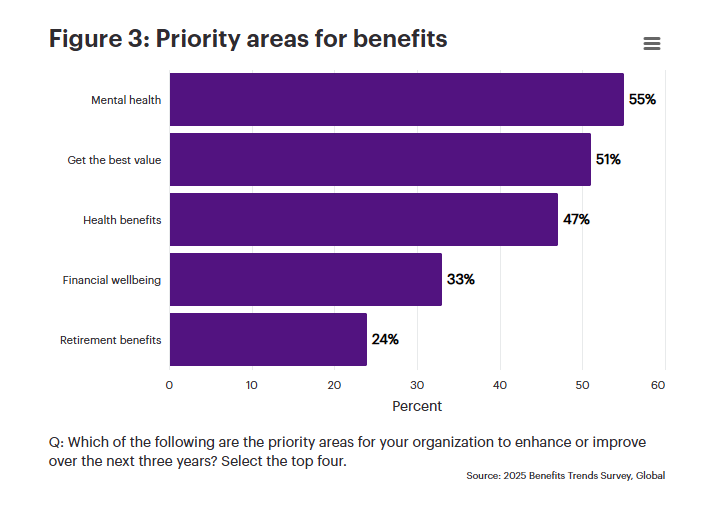
WTW’s data shows that mental health is the top priority area for benefits (55%), while getting the best value out of benefits was in second place (51%).
Employers are ensuring they are getting the most of their benefit vendor relationships, as well as ensuring that employers are actually using the benefits on offer – there’s no point investing in products that employees don’t actually use.
This involves improving digital navigation (63%) and technology solutions (59%) to better support employees’ user experience with benefits. Plus, rethinking communications and ensuring that all decisions are based on data.
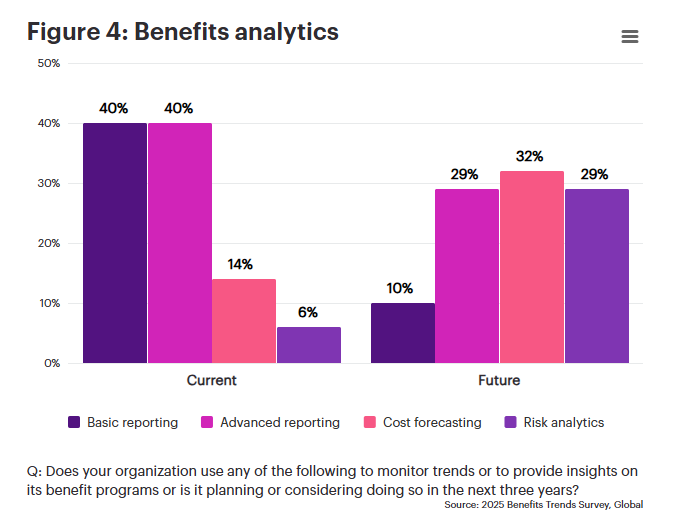
Currently, 40% of HR teams reply on basic reporting, but that is predicted to drop to 10% over the next three years, according to WTW.
Cost forecasting is expected to increase from 14% now to 32% by 2028, while risk analytics will grow from 6% to 29% over the same time period.
“Employee experience is also vitally important – with how to communicate and engage with employees on their benefits a key priority for employers to enhance.”
Employers, it's time to take action to get more out of your benefits strategy - are you ready?