



Building a Learning Organization: The Key to Long-Term Success
September 30, 2026
“Diversity is being invited to the party; inclusion is being asked to dance”, Verna Myers once said.
However, in the modern workplace, there is a third element to this. Equity is being allowed to contribute to the playlist and be consulted on where and when the party happens.
Diversity, equity and inclusion (D,E&I) as a trio have rocketed up the agenda during COVID-19 and the transformation of the world of work.
One company leading the way and upping its focus on diversity and inclusion is tech giant Salesforce. Importantly, the tech giant talks about equality, instead of equity, as the E in D,E&I.
A recent move from Salesforce has been the decision to tie executive pay to progress around environmental, social and governance (ESG) goals.
This includes success around diversity, equity, and inclusion, as well as being a sustainable business that cares about more than profits.
The decision brings Salesforce in line with many of its tech competitors, such as Microsoft, Apple, and Intel.
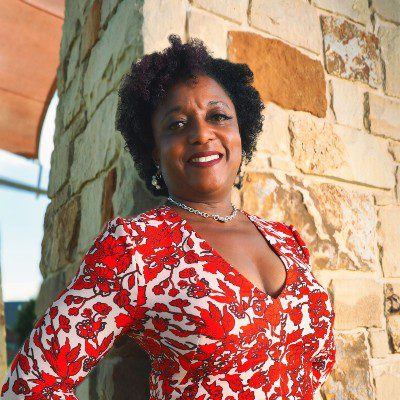
But, will Salesforce achieve its goals – and will executives receive their full bonuses? UNLEASH caught up with Stephanie Shipp, Salesforce’s vice-president of equality strategy, to find out all the details.
Shipp started by sharing the details of Salesforce's executive pay decision. She explains that at Salesforce the results are binary – this means that the company either meets its diversity or environmental goals, or it doesn’t. This means senior executives will miss out on their pay even if progress is made toward company goals.
She continues to discuss how equality is a core value at Salesforce, alongside innovation, culture, and customer success.
Shipp shares with UNLEASH: “Creating a culture of equality isn’t just the right thing to do; it is also the smart thing” – “it empowers us to innovate, build deeper connections with our customers, and ultimately become a better company”.
To push the D,E&I agenda further, Salesforce has a dedicated equality team within its HR or 'Employee Success' team, which has the simple vision “to become the most inclusive workplace possible” and is led by newly appointed chief equality officer Lori Castillo Martinez.
Shipp, also new to her role, sits within this equality team. She explains the team leads the “company’s global equality efforts, including…strategy and programs, with a view to accelerating and integrating people and equality initiatives at Salesforce”.
So, what does the equality strategy look like at Salesforce? It aims to ensure the company’s workforce “reflects the world around us” – so it accelerates the representation of women and minority groups.
This is reflected in Salesforce’s move to not just make its hiring process more equitable, but also adapt its retention strategies to improve the workplace experience of under-represented groups. Black women, for instance, leave Salesforce at higher rates than other demographics.
Salesforce aims to be an inclusive workplace through its “equity-focused processes and programs”. A key milestone for Shipp was launching and scaling its employee advocacy program Warmline.
The tech giant recently extended its Warmline program to include LGBTQ+ employees as part of its move to make its benefits even more gender inclusive by introducing support around gender affirmation medical procedures and treatments.
The second part of its equality-focused perks and benefits includes introducing bias and microaggression training at all stages of the talent process.
According to Shipp, Salesforce’s equality strategy involves having a “global mindset”. “Our work can’t be defined by a US-centered approach”, she explains.
Linked to this, the tech giant is very clear that success in D,E&I involves having an impact beyond the company itself.
Salesforce wants to “set the blueprint for other for other organizations to follow” thereby “creating a fairer and more equal society for all”, notes Shipp. To achieve this, it works with its customers, partners, and other stakeholders “who are also on this equality journey”.
Shipp is clear that “businesses can be powerful platforms for social change”; “it is our responsibility to further equality for all”.
But Salesforce doesn’t just want to lead the way as an equitable business, it also wants to act as a blueprint of a sustainable company.
This is why it has made sustainability its fifth core value earlier in 2022, and has tied its executive pay to ESG improvements in general, not just diversity success.
Salesforce announced it had achieved net zero across its full value chain and uses 100% renewable energy for its operations back in September 2021.
In light of this achievement, the tech giant announced its Climate Action Plan that shares its journey to net zero and acts as a blueprint for others, including its clients and suppliers, to follow.
Despite Salesforce’s sustainability success, its employees are concerned about leadership’s plans to explore the NFT market, which is notoriously bad for the environment.
Shipp did not answer UNLEASH’s questions about the NFT situation, but a Salesforce spokesperson told us back in February 2022: “Our core values guide everything we do, including the development of our products.
“We welcome our employees’ feedback and are proud to foster a culture of trust that empowers them to raise diverse points of view.”
Clearly, Salesforce is living up to its promise of listening to feedback; Shipp notes: “We take employee listening extremely seriously, it impacts many aspects of our decision-making”.
Central to why ESG commitments, and D,E&I goals, have rocketed up the agenda in recent years is their link with talent attraction and retention.
Employees are making it clear that they want to work for companies that share their values. Working in a fair and inclusive environment is hugely important to workers, particularly millennials and Gen Z.
Therefore, being a sustainable, equitable, and inclusive workplace is helping employers win in the ongoing war for talent, which has been dubbed the ‘Great Resignation’.
This is confirmed by numerous studies, and Shipp notes that “value-driven leadership is essential in today’s business climate, particularly when it comes to attracting and retaining talent”.
She concludes: “We all have a role to play in building a better world and a fairer society…Businesses [that] look beyond generating profit are more likely to be trusted and supported by their employees.”
Are you ready to follow the lead of companies like Salesforce?