



Building a Learning Organization: The Key to Long-Term Success
September 30, 2026

On average, HR teams are more stressed and burnt out than employees – that’s according to new data from HR tech company Culture Amp.
Over the last three years, Culture Amp has surveyed almost 10,000 HR workers across the world – of the 2,400 surveyed in 2023, their wellbeing was much lower than the tech company’s benchmark from employee experience surveys.
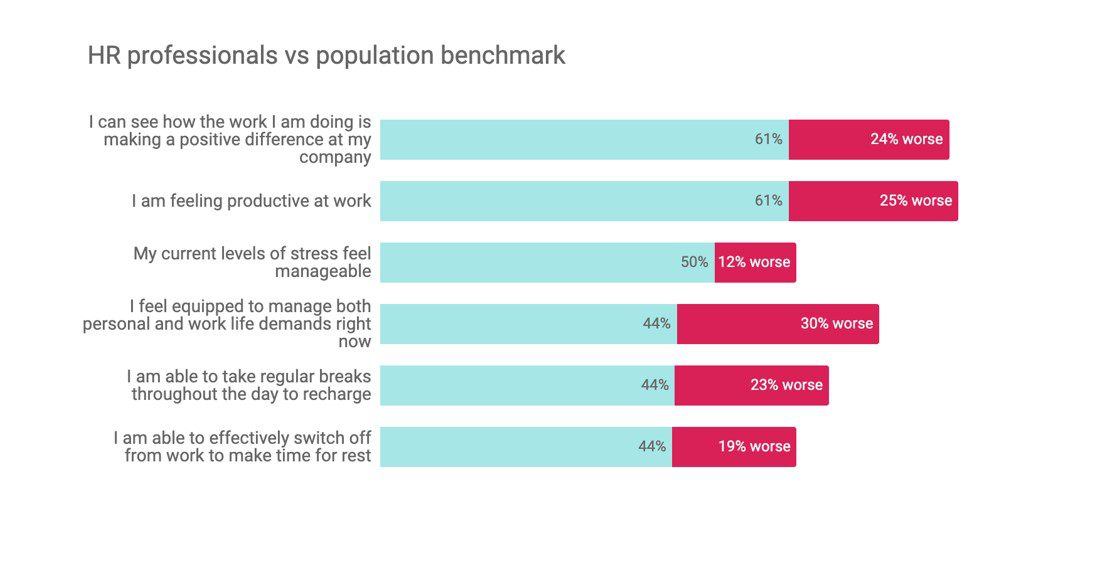
They are particularly struggling around work-life balance – this has taken a nosedive since 2020.
Three years ago, 45% of HR teams felt able to manage their own personal work-like balance, this declined to 40% in 2021 and 2022, and has only crept up slightly to 44% in 2023.
This work-life balance challenge is particularly acute in sectors like construction, media, healthcare, non-profit and transport.
HR workers are facing issues with taking breaks from work, their productivity and, most worryingly, feeling like their work is making a difference.
The fact that HR’s burnout is impacting their purpose and perspectives on work is a real concern for organizations.
Ultimately, HR teams are essential to business bottom lines.
Companies spent the largest share of their revenue on talent – without HR, they could not successfully attract or retain that talent, thereby hindering business growth.
So, what is the solution to HR’s own wellbeing challenge?
Culture Amp’s lead people scientist Dr Arne Sjostrom shared: “During the pandemic there was a strong focus on how HR can support the workforce in navigating the crisis.
“The remit - and associated workloads - of HR professionals expanded without there being a proper support system in place.
"This data should be a clear call for businesses to look after their HR teams more effectively and provide them the support they need."
This could be more resources, bigger teams or simply better technology.
Sjostrom concluded: “For HR professionals it is an important reminder to practice self-care to protect their own mental health and to be able to help their organization to maneuver current and future challenges.”