
Why Nestlé put learning over knowledge at the heart of its talent playbook
September 16, 2026

Pre-pandemic wellbeing was not a must, but COVID-19 has irreversibly changed that. So much so that WTW (formerly Willis Towers Watson) has found that wellbeing is a top priority for HR teams.
The pandemic has seen the reshuffling of priorities, and to get a better picture of HR plans the risk management company spoke to 322 US employers as part of its 2021 Wellbeing Diagnostic Survey which was conducted in October 2021. The respondents were responsible for the HR needs of 5.3 million workers.
The research found that 86% of employers consider wellbeing a top priority, yet nearly half (49%) of respondents had yet to formalize a strategy.
Moreover, the progress in different areas of wellbeing varied greatly.
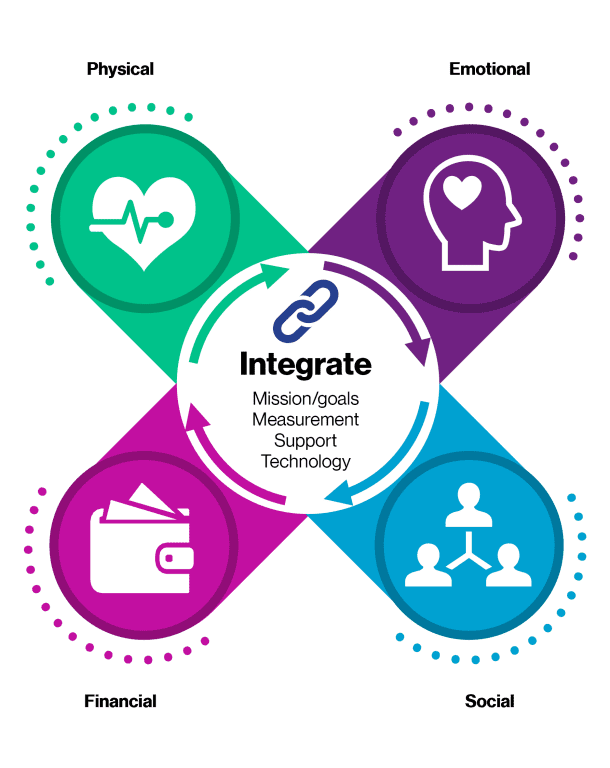
The study outlined four areas of wellbeing and what companies were doing in these spaces.
Emotional wellbeing has undoubtedly become a key talking point as people experience record levels of burnout and dissatisfaction with their work. So much so, that millions have left work with no clear plans to return as part of the 'Great Resignation'.
WTW found that 48% of respondents are planning or contemplating putting a company-wide emotional wellbeing strategy in place. At the moment, only 35% of respondents have such a strategy.
Additionally, 39%of companies are planning or considering redesigning their employee assistance program (EAP). This could mean benefit changes for employees.
Physical wellbeing was also important to the correspondents, and 65% are currently offering a mobile application for it. On top of that, 25% of HR teams are considering implementing a physical wellbeing app.
Financial wellbeing appeared to be less of a concern, and only 34% intend to set objectives or track financial wellbeing programs. Currently, 18% of companies offer wellbeing support for people going through significant financial decisions.
When it comes to social wellbeing, 32% of people who responded are thinking about on-site perks to encourage more face-to-face interaction and 37% already do this. Almost half of the correspondents (47%) said that they already had diversity, equity, and inclusion (D,E&I) programs set up, with 32% intending to implement measures. Of course, that does leave 21% of companies who intend to do nothing about improving D,E&I.
"For years, employers have used financial rewards to encourage employees to take action for their own wellbeing; however, as those incentives have often failed to change employee behavior, employers are seeking new avenues to engage and incent employees to take charge of their own wellbeing.”