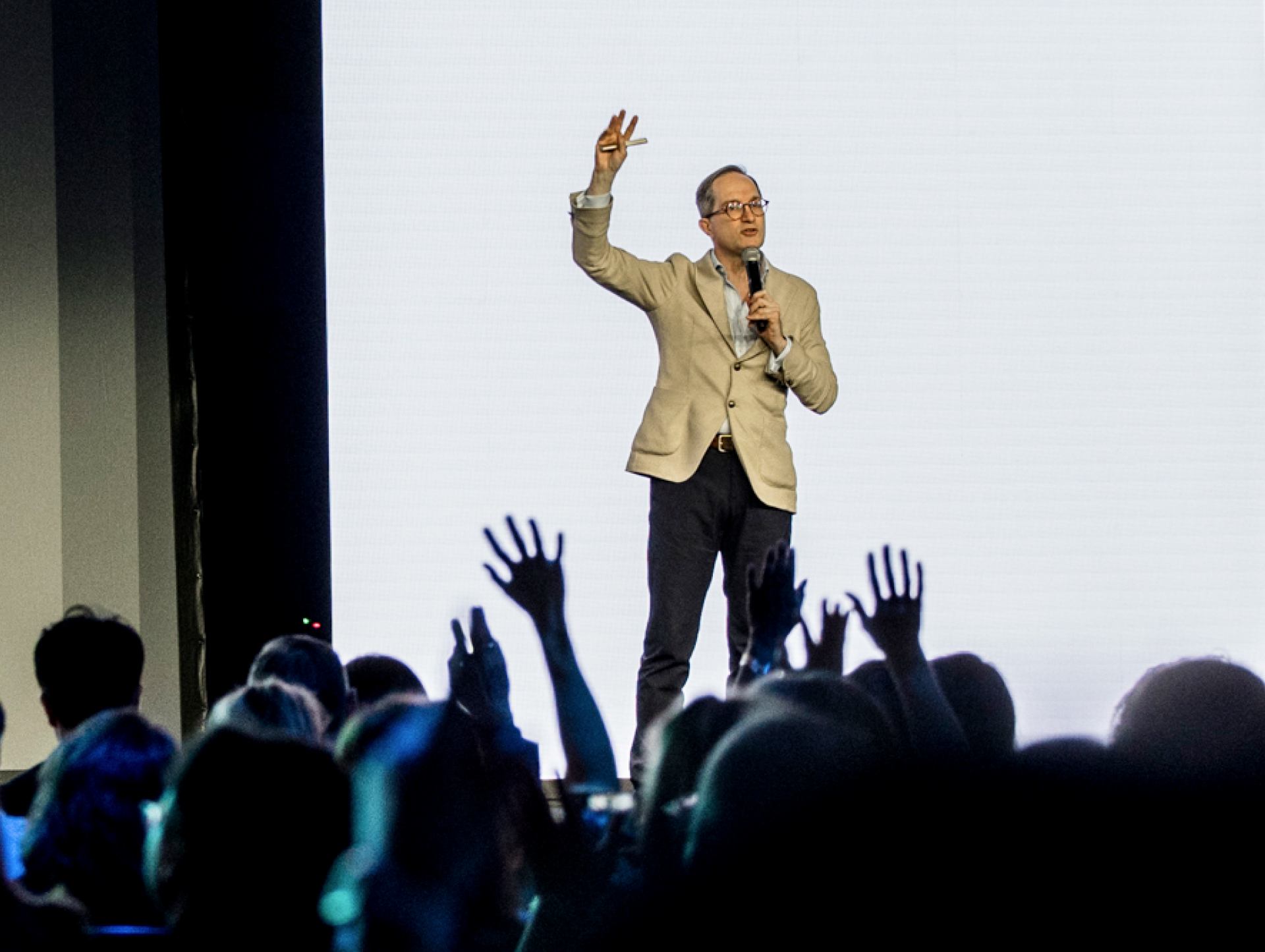



‘You need the humility to believe you haven’t solved it’: OpenAI’s CPO on fast decisions and the people side of AI
October 15, 2026

Low employee engagement is now costing the global economy $10 trillion a year.
Despite billions being poured into AI, just 12% of workers believe it has meaningfully changed how work gets done.
The findings of Gallup’s latest State of the Global Workplace report suggest the problem isn’t AI - it’s the way organizations are structured and being led.
The 2026 edition of the report found employee engagement has concerningly fallen to its lowest level since 2020, but there are deeper systemic issues at manager and leadership levels to be addressed as fundamental drivers of continuously falling engagement.
UNLEASH examines the three key decisions in front of HR leaders uncovered by Gallup’s report.
The global downturn in employee engagement is primarily attributed by Gallup to a steeper fall in manager disengagement.
While engagement among non-manager roles has remained largely flat in the past three years, manager engagement has dropped from 31% in 2022 to 22% in 2025.
The report notes managers have lost the “engagement premium” historically held over individual contributors, but best-practice organizations recorded manager engagement of 79% - nearly four times the global average.
An unengaged management layer can undermine organizations from different angles, while simultaneously creating a ripple effect by disconnecting strategy from execution at employee level.
Gallup’s research also indicates this trend is on a sustained downward curve, meaning HR leaders need to address the problem before it becomes structurally systemic.
Tracking manager and employee engagement separately will help indicate how the organization is actually functioning, separating drivers from outcomes, while highlighting downstream performance indicators earlier.
By investing in manager wellbeing, coaching and peer support as core pillars of people strategy, HR leaders can move managers from a delivery later within the organization to a priority layer, with further impact on overall employee engagement.
“In organizations investing in AI, the strongest predictor of employee adoption, aside from technical integration, is whether their direct manager actively champions it,” Jon Clifton, CEO of Gallup, noted in the report.
“Even the most sophisticated neural network cannot overcome an indifferent team leader.”
Despite the increasing investments being pumped into enterprise AI the impact on work transformation remains low – only 12% of workers strongly believe AI has transformed work to date, Gallup found.
The fact is that AI adoption alone will not drive transformation; the tools are there but without visible leadership, change won’t happen.
The report found employees are 8.7x more likely to view work as transformed by AI and 7.4x more likely to agree that AI gives them more opportunities to do what they do best every day when managers actively support the use of AI by their teams.
For HR leaders, this means actively equipping managers with the knowledge and skills to lead AI-powered transformation, translating strategy into day-to-day tasks throughout the organization.
Making AI a core pillar of the manager role moves it from a technology tool to a transformational driver, builds trust at the frontlines of work, and reshapes roles beyond task execution.
The findings of Gallup’s report shows that wellbeing challenges within organizations are increasingly leadership‑centric, rather than individual.
While global wellbeing rose in 2025 for the first time in three years, leaders and managers reported higher stress, anger, sadness and loneliness than individual contributors.
Gallup found that leadership roles “offers little upside in terms of positive emotions: Leaders are less likely than individual contributors to say they smiled or laughed a lot the previous day and less likely than managers to report experiencing enjoyment.”
The findings shows that leadership roles are becoming emotionally unsustainable. Without redesign, organizations will burn through leadership capacity faster than they can replace it.
For HR leaders, the decision is whether to treat these outcomes as a resilience problem - something leaders must manage alone - or as an organizational design issue.
Leaders and managers reported experiencing all negative emotions at lower rates than individual contributors when they are engaged. They are also 14% more likely to be thriving in their overall life than the average leader.
In short, wellbeing among leadership and managers increases as the environment around them works. When organizations embed wellbeing for workload, span of control, expectations and managerial support into how leadership roles, this increases resilience.