

The Talent Operations Transformation
October 6, 2026
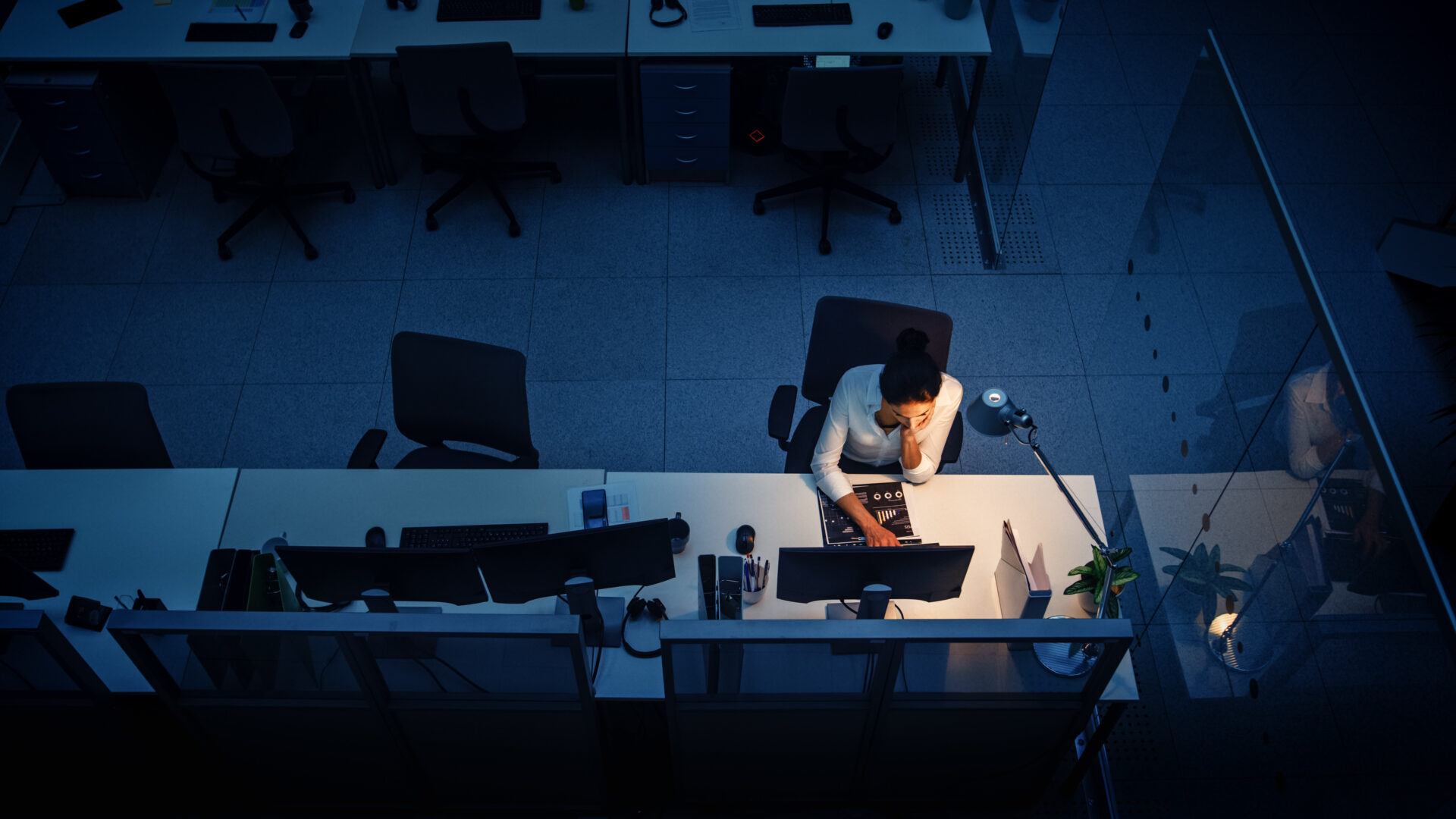
Slack’s survey of more than 10,000 desk workers based in the UK, the US, Australia, France, Germany, and Japan found high levels of presenteeism – working beyond standard office hours – are continuing across the globe, negatively impacting productivity.
According to the survey, more than one in three (37%) desk workers say they put in extra hours on a weekly basis, while over half (54%) of this cohort say it’s not because they want to, rather that they feel pressured to do so.
Those that said they feel pressured to work after-hours registered 20% less productivity than those who finish at normal time.
Employees who work after hours are 50% more likely to say their productivity is blocked by competing priorities compared to those who log a standard workday, according to the survey.
However, employees who work outside of standard hours by choice, to better suit their schedule or to pursue personal ambitions, reported “no negative impacts and even a slight uptick in their wellness and productivity scores,” Slack stated.
“What’s clear from the research is that there doesn’t need to be a trade-off between productivity and employee wellbeing. In fact, UK workers who log off at the end of the workday register 10% higher productivity scores than those who feel obligated to work after hours,” Deidre Byrne, head of UK & Ireland at Slack, exclusively tells UNLEASH.
Meanwhile, employees who work outside regular hours reported significantly higher levels of work-related stress and burnout, as well as lower satisfaction with their overall working environment, leading to lower overall mental wellbeing.
Despite the findings around presenteeism and timekeeping uncovered by the report, Slack also found a positive degree of optimism on how the adoption of AI could help combat these issues.
Nearly all (94%) of executives stated they feel “some urgency” to incorporate AI into their organization, although this will take time, given only one in five desk workers reported that they have used AI tools for work.
As such, the impact of AI on productivity is yet to manifest for more than 80% of desk workers.
Employees in the UK were the least likely to see any impact of AI tools (19%), “suggesting their urgency does not yet match their action” according to Slack.
Despite this, UK-based workers reported being the most likely to recognize a “high or existential need” for Generative AI at work - meaning that they are most likely to believe it should be implemented in the next 18 months to three years – above employees in Australia (57%), Japan (55%), the US (44%), Germany (41%) and France (33%).
Timekeeping is predicted to be the area where AI will have the most positive impact among desk workers globally, with the top three specific tasks cited as meeting notes and recaps, writing assistance, and automation of workflows.
“In turn, this will also allow workers to reclaim their day in a way that’s both better for their wellbeing, and their productivity.”